

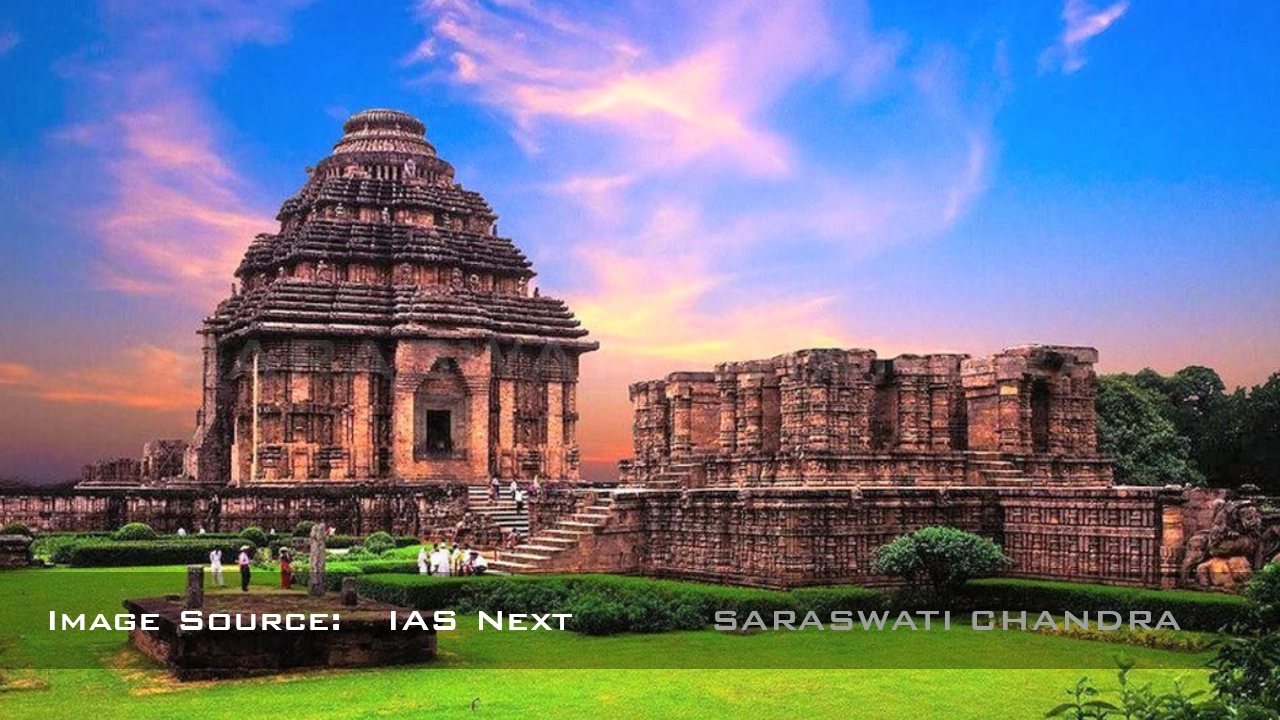
Timeless Genius: Unlocking the Secrets of Konark Sun Temple Engineering
India’s history is a vast tapestry of empires, cultures, and astonishing innovations. Many ancient structures stand as silent witnesses to this glorious past. They showcase a profound understanding of science and art. Among these, few capture the imagination like the Sun Temple at Konark. This is not just a temple; it is a chronicle written in stone. This article delves deep into the incredible Konark Sun Temple engineering. We will explore how its 13th-century builders created a masterpiece that continues to defy modern conventions. Its precision, scale, and cosmic harmony are truly unparalleled.
The Sun Temple is an ode to the Hindu Sun God, Surya. It stands proudly on the coastline of Odisha. Conceived as a colossal chariot for the deity, its design is a marvel of creative and technical brilliance. Every stone tells a story of mathematical precision and astronomical knowledge. Modern engineers study its construction with awe. They wonder how artisans with rudimentary tools achieved such perfection. This structure represents the pinnacle of Kalinga temple architecture. It remains a beacon of India’s formidable intellectual heritage.
The Birth of a Legend: History and Vision of Konark
Every great monument is born from a powerful vision. The Sun Temple at Konark is no exception. Its story is a blend of historical fact and enduring legend. Understanding its origin is key to appreciating its purpose and design.
A King’s Triumphant Proclamation
The temple’s construction is credited to King Narasimhadeva I. He reigned over the Eastern Ganga Dynasty from 1238 to 1264 CE. The temple was built to commemorate his significant military victories, particularly against the Turko-Afghan rulers of Bengal. It was not merely a place of worship. It was a bold declaration of power, prosperity, and cultural supremacy. The king dedicated this monumental project to Surya. The Sun God symbolizes light, energy, and victory over darkness. Therefore, the temple’s grandeur reflected the king’s own might and devotion.
The Legend of Samba’s Curse
Beyond history, a popular legend enriches Konark’s story. It involves Samba, a son of the god Krishna. Cursed with leprosy, Samba was advised to perform penance to Surya, the healer of all skin ailments. He journeyed to a sacred spot on the coast of Odisha. There, he worshipped the Sun God for twelve years. Pleased with his devotion, Surya cured him. In gratitude, Samba decided to build a magnificent temple in Surya’s honor. While this legend predates the current structure, it sanctified the site. It infused the location with a deep spiritual significance that King Narasimhadeva I later monumentalized.
A Masterpiece of Kalinga Architecture
The Sun Temple is the finest example of Kalinga architecture. This style flourished in the ancient region of Kalinga, which corresponds to modern-day Odisha. It has a unique and distinct architectural grammar. The Konark Sun Temple engineering showcases this style at its most ambitious and refined.
The Three Core Components
Kalinga temples typically consist of two main parts. The Konark complex, in its original form, had three.
- Deula (Sanctum Sanctorum): This was the main tower, a towering structure that once stood over 200 feet high. It housed the principal deity. The idol was strategically placed to catch the sun’s rays at dawn, noon, and dusk. Sadly, this main spire collapsed centuries ago.
- Jagamohana (Audience Hall): This is the magnificent structure that still stands today. It is a pyramidal hall with a massive roof, built to accommodate large gatherings of devotees. Its walls are covered in breathtakingly detailed carvings.
- Natamandira (Dance Hall): Situated in front of the Jagamohana, this is a separate, raised platform with intricately carved pillars. It was used for ritualistic music and dance performances in honor of the deity. Its open-air design allowed the arts to be presented in a grand setting.
The Grand Symbolism of the Chariot
The temple’s most iconic feature is its design as a celestial chariot. This concept is executed with stunning detail.
- Seven Horses: The chariot is pulled by seven mighty horses sculpted at its eastern entrance. These represent the seven days of the week or the seven colors of the visible spectrum of light (VIBGYOR).
- Twenty-Four Wheels: The base of the temple is adorned with 24 gigantic, intricately carved wheels. These wheels are not merely decorative. They are sophisticated sundials. Each wheel represents a fortnight in the Indian calendar. Their spokes and carvings allow for the precise calculation of time.
This chariot metaphor transforms the temple from a static building into a dynamic representation of time’s passage, powered by the sun itself.
Unraveling the Konark Sun Temple Engineering
The true marvel of Konark lies in the technical genius of its builders. They combined astronomical knowledge, advanced metallurgy, and masterful stonework. Let’s dissect the core engineering principles that make this temple a timeless wonder.
The Genius of Celestial Alignment
The temple’s orientation is a testament to the advanced astronomical knowledge of its creators. It was designed as a precision instrument for tracking the sun.
- East-West Alignment: The entire complex is precisely aligned along the east-west axis. The main entrance faces east to greet the rising sun. At the equinoxes (March and September), the first rays of the sun would travel through the Natamandira and Jagamohana, striking the principal idol in the Deula.
- Solstice Tracking: The temple’s layout also likely accounted for the solstices. The sun’s changing position throughout the year was mapped onto the temple’s architecture, turning the entire structure into a massive, functioning calendar.
- The Wheels as Sundials: Each of the 24 wheels, about 10 feet in diameter, functions as a sundial. A wheel has eight major spokes, which divide the 24 hours of the day into eight periods of three hours each. The space between major spokes is further detailed with 30 beads, representing 3-minute intervals. By observing the shadow cast by the central axle pin on the spokes and beads, one could tell the time with remarkable accuracy. This celestial alignment turns the temple into a living clock.
The Mystery of the Magnetic Central Axis
One of the most debated and fascinating aspects of the Konark Sun Temple engineering is the legend of its magnetic core.
According to local lore, the main idol in the sanctum was suspended in mid-air. This was supposedly achieved using a powerful magnetic field. It is believed that a giant lodestone (a naturally magnetized mineral) was placed at the peak of the main Deula. Another powerful magnet was embedded in the temple’s foundation. The deity, possibly made with a significant iron content, was then held floating in the precise center of the sanctum by these opposing magnetic forces.
While no definitive proof of this exists today, the legend points to a deep understanding of magnetic principles. The story further suggests that this giant lodestone disrupted the navigational compasses of passing European ships. To stop this interference, sailors allegedly scaled the temple, removed the lodestone, and inadvertently caused the temple’s structural imbalance, leading to its eventual collapse. Though likely an exaggeration, this theory highlights the advanced scientific thinking attributed to the temple’s architects.
Masterful Materials and Construction Techniques
Building a monument of this scale required incredible logistical and engineering skill. The choice of materials and construction methods was critical to its longevity.
- Stone Sourcing and Transport: The temple is built primarily from three types of stone. Khondalite was used for the main structure. It is a type of sandstone that, while easy to carve, weathers over time. Chlorite was used for the more detailed sculptures and doorframes due to its finer grain. Laterite was used for the foundation and core of the platform. These massive stone blocks, some weighing over 20 tons, were quarried miles away. They were likely transported on rafts along rivers and then moved on land using wooden rollers and pulleys.
- Dry Masonry and Interlocking: The builders of Konark used a technique known as dry masonry. The stone blocks were so finely polished and fitted together that they required no mortar. Their immense weight and perfect fit held them in place. This required exceptional precision in stone cutting.
- Iron Dowels and Beams: To reinforce the structure, the Kalinga architects used iron dowels to clamp the stones together. Massive iron beams, some up to 35 feet long, were also used to support the roof of the Jagamohana. The production and installation of such large iron beams in the 13th century was a significant metallurgical achievement.
- Corbelled Roofs: The roof of the Jagamohana is a classic example of a corbelled arch. Instead of a true arch with a keystone, the roof was built by progressively overlapping horizontal layers of stone. Each layer projects slightly inwards from the one below it, eventually meeting at the top. This technique, while effective for creating large interior spaces, puts immense stress on the supporting walls.
The Intricate Sculptures: Where Art and Engineering Meet
The sculptures of Konark are not mere embellishments. They are an integral part of the temple’s narrative and structural fabric. Over 1,200 artisans and sculptors reportedly worked for 12 years to complete the temple.
A Stone Chronicle of 13th-Century Life
The temple walls are a vibrant encyclopedia of life in medieval Odisha. The carvings depict:
- Royalty and Warfare: Scenes of the king in his court, military processions, and battles.
- Daily Life: Images of women cooking, men hunting, children playing, and traders with their goods.
- Flora and Fauna: Exquisite carvings of elephants, lions, horses, and mythological creatures.
- Music and Dance: The Natamandira is covered with figures of musicians playing various instruments and dancers in dynamic poses.
The Famous Erotic Sculptures
Konark is well-known for its explicit erotic sculptures, particularly on the upper levels of the Jagamohana. These have been a subject of much debate and speculation. Rather than being purely for titillation, they are believed to represent several concepts:
- Tantric Beliefs: They could be linked to the tantric traditions of Vajrayana Buddhism, which were prevalent in the region and saw sexual union as a metaphor for spiritual enlightenment.
- Symbol of Fertility: In a temple dedicated to the Sun God, the source of all life, these images symbolize fertility, creation, and the continuation of life.
- Test of the Devotee: One interpretation is that a devotee must transcend worldly desires before entering the sacred sanctum. The carvings serve as a final test of detachment.
These sculptures demonstrate the open and sophisticated worldview of the society that built the temple, where human life in all its aspects was seen as part of the divine order.
The Slow Decline and Preservation of a Marvel
The glorious Sun Temple did not stand in its full splendor for long. Its decline began a few centuries after its construction. The exact cause of the collapse of the main 227-foot-high Deula is still debated among historians and archaeologists.
Several theories exist:
- Weak Foundation: The temple was built on the sandy soil of a riverbed. This may have been unable to support the immense weight of the main tower over centuries.
- Natural Disasters: The coastal region is prone to cyclones and seismic activity. A major earthquake or a powerful cyclone could have severely damaged the towering spire.
- Invasion and Desecration: The most cited reason is the attack by Kalapahad, a general of the Sultan of Bengal, in the 16th century. It is believed his forces desecrated the temple and may have damaged its structural integrity.
- Removal of the Lodestone: As the legend goes, the removal of the central magnetic stone disrupted the temple’s structural balance, leading to its collapse.
By the 19th century, the temple was largely in ruins and engulfed by sand. Preservation efforts began under the British rule. In the early 20th century, to save the Jagamohana from a similar fate, it was filled with sand and its entrances were sealed. This drastic measure by the Archaeological Survey of India (ASI) has preserved the structure we see today.
Why the Konark Sun Temple Still Baffles Modern Experts
Despite our technological advancements, the Konark Sun Temple engineering continues to pose profound questions.
- Logistical Prowess: How did 13th-century engineers quarry, transport, and lift 20-ton stone blocks over 200 feet high without modern cranes and machinery?
- Astronomical Precision: How did they achieve such perfect alignment with celestial bodies without telescopes or digital tools? The knowledge of trigonometry, geometry, and astronomy required was exceptionally advanced.
- Metallurgical Skill: Forging and installing massive iron beams was a feat that European blacksmiths would struggle with for centuries to come.
- Artistic Execution: The sheer volume and quality of the carvings, completed in just 12 years, suggests an incredibly organized and skilled workforce.
The temple serves as a humble reminder that “modern” is not always “more advanced.” It is a monument to human ingenuity that transcends time, a puzzle in stone that continues to inspire awe and challenge our understanding of the past.
Frequently Asked Questions (FAQ)
Q1: Why is the Konark Sun Temple so famous?
The Konark Sun Temple is famous for its unique chariot-shaped architecture, incredible engineering, and intricate sculptures. It’s a UNESCO World Heritage Site, recognized for its representation of the Sun God Surya’s chariot, its functioning as a giant sundial, and its artistic depiction of 13th-century life.
Q2: What is the secret of the Konark Temple wheels?
The secret of the Konark wheels is that they are not just decorative. Each of the 24 wheels is a functional sundial. By observing the shadow cast by the sun on their spokes and carved beads, one can calculate the time of day with remarkable accuracy, down to a few minutes.
Q3: Who destroyed the Konark Sun Temple?
There is no single confirmed cause for the temple’s ruin. The collapse of the main tower is attributed to a combination of factors, including a weak foundation on sandy soil, natural disasters like cyclones or earthquakes, and desecration during invasions, most notably by the 16th-century general Kalapahad.
Q4: Is the floating idol in Konark still there?
No, the floating idol is not there, and its existence is a matter of legend rather than proven fact. The main sanctum where it was supposedly housed collapsed centuries ago. The legend speaks of a complex magnetic system, but no physical evidence of it remains today.
Q5: Can we go inside the main sealed hall (Jagamohana) of Konark?
No, visitors cannot go inside the Jagamohana. In 1903, to prevent its collapse, the hall was filled with sand and stone and permanently sealed by the Archaeological Survey of India. This has preserved the magnificent structure for over a century.
A Legacy Etched in Stone
The Sun Temple at Konark is more than just an ancient ruin. It is a profound statement of artistic vision, scientific knowledge, and engineering prowess. It reminds us that our ancestors possessed a deep, holistic understanding of the world. They saw no separation between art, science, and spirituality. The Konark Sun Temple engineering is a testament to this integrated wisdom. It stands as a timeless challenge to modern builders and a source of immense pride and wonder for all of humanity.

